

A not for profit group that creates model legislation about insurance issues “for the public good” has created model legislation regulating auto glass repair and replacement business practices. They designed the model so any state in the country could adopt it.
A National Council of Insurance Legislators (NCOIL) committee recently approved the Motor Vehicle Glass Model Act, though NCOIL’s executive committee still has to confirm it. The model includes language prohibiting the Assignment of Benefits (AOB), mandating notifying customers of their Advanced Driver Assistance Systems (ADAS) and doing what it describes as protecting consumer’s right to choose.
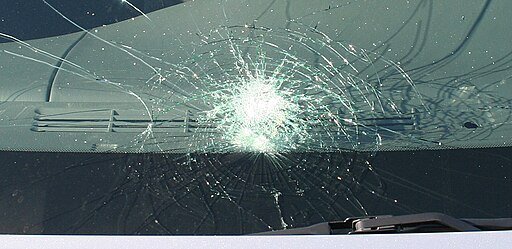
NCOIL developed a model act regulating auto glass practices that individual states can adopt.
NCOIL is a legislative organization mostly comprised of multiple states’ lawmakers serving on committees for insurance and financial institutions. According to NCOIL’s website, it “writes Model Laws in insurance, works to both preserve the state jurisdiction over insurance … and [serves] as an educational forum for public policymakers and interested parties.”
The organization’s Property & Casualty Insurance Committee approved the model on February 14. The model is not legislation, however; once approved by NCOIL’s executive committee, state congresses could use the model as a template to introduce auto glass bills.
Kentucky state representative Michael Sarge Pollock sponsored the model because it is partially inspired by Kentucky’s AOB ban, which the governor signed in the spring of 2024.
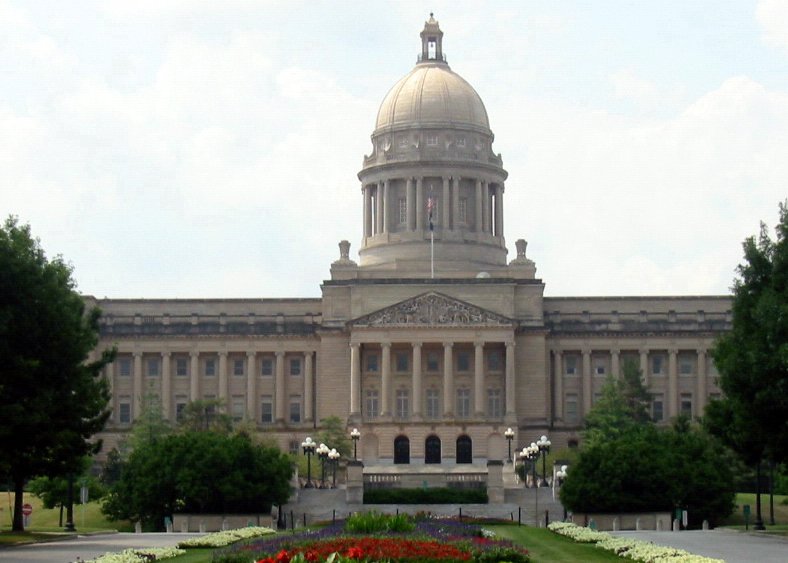
Kentucky’s AOB ban became law in the spring of 2024.
“I was proud to sponsor this Model as it is based on a law we passed in Kentucky in response to rising concerns about auto glass repair fraud which unfortunately is a growing trend across the country,” he says. “Other states have already taken action, and many more are certain to follow this year, so I’m glad NCOIL was able to address the issue in an efficient manner to provide valuable guidance for states as they look for solutions.”
Like Florida’s AOB ban, which became law in May 2023, and Kentucky’s AOB ban, NCOIL’s model act would regulate AOB. It contains a section that would prohibit customers in states that adopt the model from signing their insurance rights, duties or benefits to a shop. It also has a section that would ban shops from providing any kind of gift “or item of value” to customers.
The model would also require auto glass shops to tell customers if their vehicle has ADAS capabilities and if any part of that system needs recalibration after windshield replacement. They’d have to notify shops if they were unable or unwilling to perform the recalibration so the customer could take it to the dealer or another recalibrator.
The model would regulate how much an auto glass business can charge for its services.
“A motor vehicle glass shop shall … not charge more than the reasonable and customary fees and costs to an insured for a repair or replacement of damaged motor vehicle glass and any associated calibration or recalibration of the motor vehicle’s advanced driver assistance system as recommended by the vehicle manufacturer specifications,” the model says.
Shops would also have to provide a “good faith estimate” of a service’s cost up front and an updated estimate before doing the work. After completing the job, shops would need to give customers an itemized invoice, a receipt and a notice saying whether an ADAS recalibration was performed. If the recalibration didn’t work, shops would have to advise customers not to use the ADAS features until a dealership or other expert performed a successful recalibration.
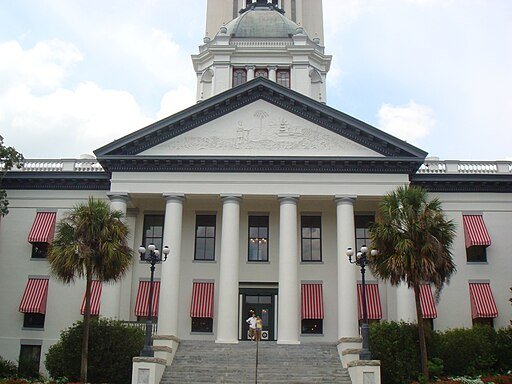
Florida’s AOB became law in May 2023. The Florida Justice Reform Institute reports that auto glass lawsuits in the state have dropped substantially now that it is law. Photo Credit: Robert Barlow via Wikimedia Commons.
“Any notice or invoice required under this Act shall be issued in the same size font as the invoice, estimate or receipt,” the model says.
The model says consumers can choose which auto glass shop they’d like to use, but insurers can still recommend alternatives.
“This section shall not be construed to prohibit an insurer [or its representative] from recommending a motor vehicle glass repair shop or providing an explanation to an insured of the coverage available, and any applicable liability limit, under any insurance policy,” the model says.
The model also specifies that a consumer’s right to choose doesn’t prevent insurers from maintaining shop networks.
One section specifies that shops aren’t allowed to circumvent these regulations by submitting wrong or incomplete documentation, saying they did the job in a different geographical location, telling a customer to lie about the damage date or making the damage worse.
According to officials, NCOIL’s executive committee will consider the model April 24-27.


